

Today's What's Alan Watching? newsletter coming up just as soon as I’m beautiful and you have a pig nose...
What's next?
Among the things coming to your inboxes next week:
- A review of Netflix's Man on Fire series adaptation, with Yahya Abdul-Mateen II as John Creasy;
- A review of Apple's new horror comedy series Widow's Bay, with Matthew Rhys;
- A new Ask Alan video mailbag, for What Else Is Alan Watching? bonus tier subscribers, so send in those questions now.
Catching up
Here's what I published since last Friday's newsletter:
- My Rod Serling biography, Serling: A Journey Into The Twilight Zone with TV's First Visionary, now has a cover, an October 13 publication date, and links for you to preorder it. I wrote all the details about that on Monday. (More on Serling in a minute.)
 Alan Sepinwall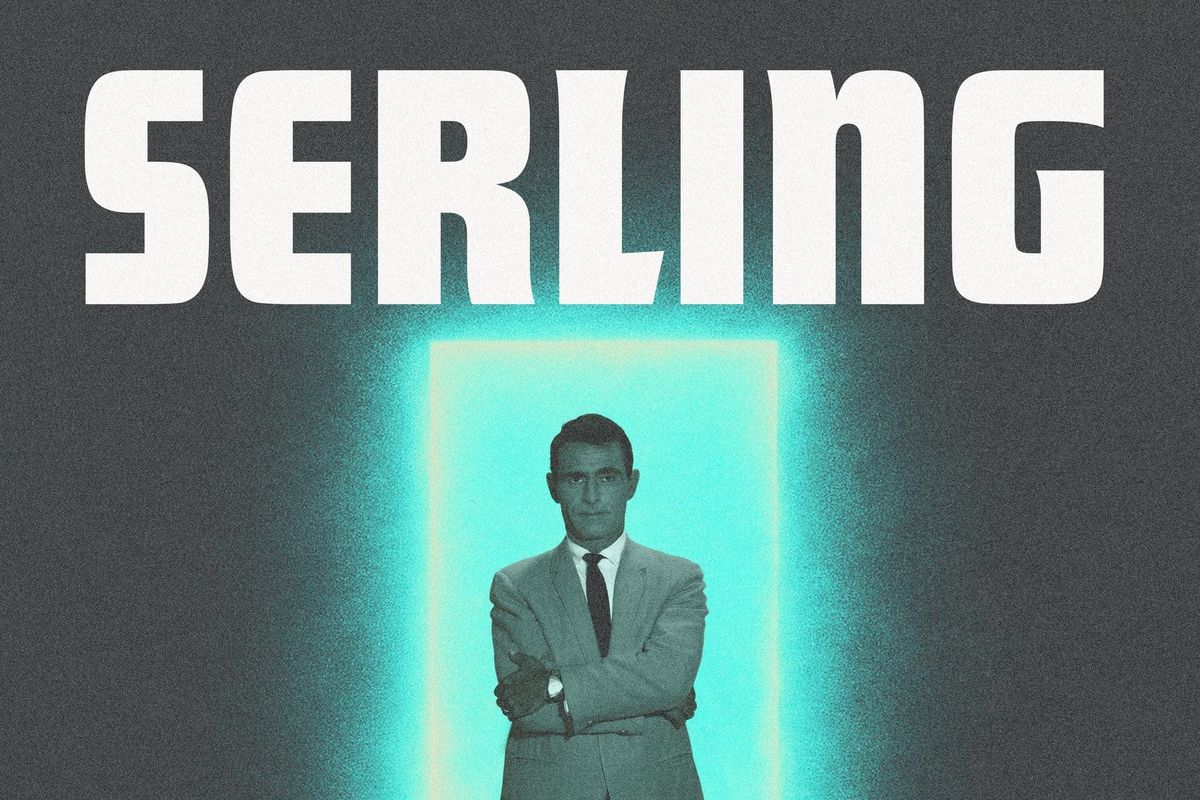
- Stranger Things is over as a series, but Stranger Things as a franchise keeps chugging along. I used this week's debut of Stranger Things: Tales From '85 (more on that in a minute, too) as an excuse to write about the very weird history of animated spin-offs of live-action shows, and to suggest some of my own based on recent-ish series:
Alan Sepinwall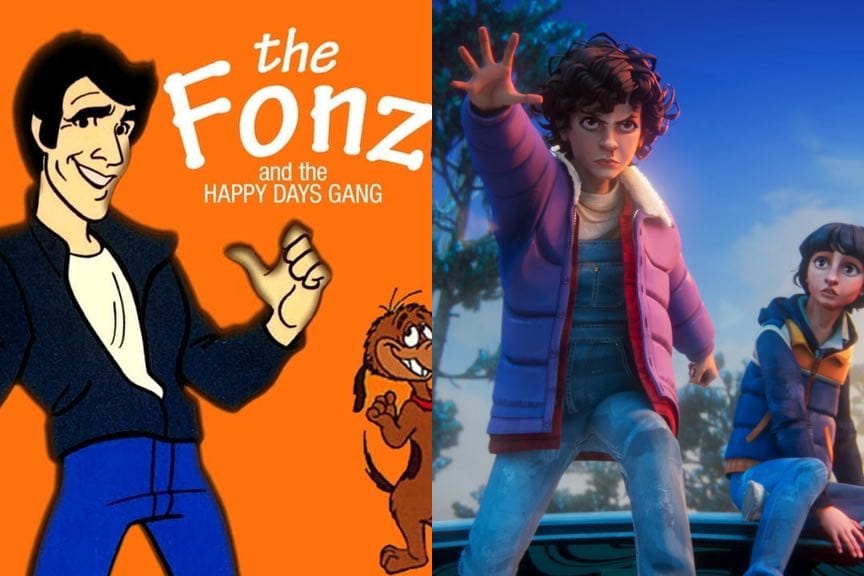
Several angry people
Over the weekend, my family and I rewatched the 1957 film version of 12 Angry Men, one of the great American movies and one of our favorites. (It's currently on Tubi, Hoopla, and Kanopy, as well as available for digital rental.) For those who don't know, it takes place almost entirely in a courthouse room where 12 jurors are deliberating over a murder trial verdict. Eleven of them immediately want to vote guilty, and it's up to the twelfth to convince them otherwise. (Even if you've never seen or heard of the film, odds are you've watched an episode of a TV show inspired by it.) Adapted by Reginald Rose from his 1954 live teleplay of the same name, and directed by Sidney Lumet, it flanks star Henry Fonda with a murderer's row of character actors: Lee J. Cobb as an abusive dad who takes the case too personally, Ed Begley Sr. as an unapologetic racist, Jack Klugman as a man who grew up in a slum much like the defendant, and Jack Warden as a bored salesman who just wants to leave because he has tickets to a ballgame that night, among others.
Warden comes up several times in the Serling book. (Have I mentioned that I wrote a book about Rod Serling? And that you can pre-order it now?) Like Rod, he was a paratrooper in World War II, and they trained at the same military base, Camp Toccoa (which some of you might remember as the setting of the first episode of Band of Brothers). He was in two Twilight Zone episodes, and appeared in multiple Serling-written teleplays. And he was the star of a project co-written by Serling and Reginald Rose, and directed by Sidney Lumet, two years before reteaming with Rose and Lumet for 12 Angry Men.
Serling and Rose were friends as well as peers, and in 1955, they teamed up together to create an anthology show called The Challenge. Every episode would examine a hot-button issue of the day, attempting to show every perspective of it, then inviting viewers to decide how they felt about it. No network was interested in financing such a wonky series on spec, so they had to get independent funding to make a pilot episode, "The Oath," focused on loyalty oaths, which were a big thing in Fifties America, even after the downfall of Joseph McCarthy. Warden plays a small town school bus driver who gets fired when he refuses to sign one of these oaths, and eventually the whole community comes together to debate it. The whole thing is on YouTube:
The Challenge never went to series, and you can probably see why from watching this. It's so idea-driven that there's not really room for anyone to be a person, other than maybe Warden's character. Serling often admitted that he had a weakness for getting preachy when he was writing overtly about causes he believed in. The writers also don't really succeed at the multiple perspectives thing, as they are pretty blatantly — and justifiably — on the bus driver's side.
That said, the town hall debate scene is notable for the moment where one of the liberal characters calls one of the conservatives a fascist, and the main liberal character gets angrier about that than he does about loyalty oaths. Among Serling's most vehement beliefs was that every side of an argument should get a chance to be heard, no matter how much the opposing side might disagree. He hated name-calling, and would be absolutely horrified by the completely silo'ed off nature of contemporary political discourse. (Though he'd be even more horrified by what one of those two silos was up to.)
This is not a review: Stranger Things: Tales From '85
Periodically, I'll watch only an episode or two of a show — enough for me to form an opinion, but not enough of a sample for me to feel strong enough in that opinion to write a real review. This is one of those instances.
Alan Sepinwall
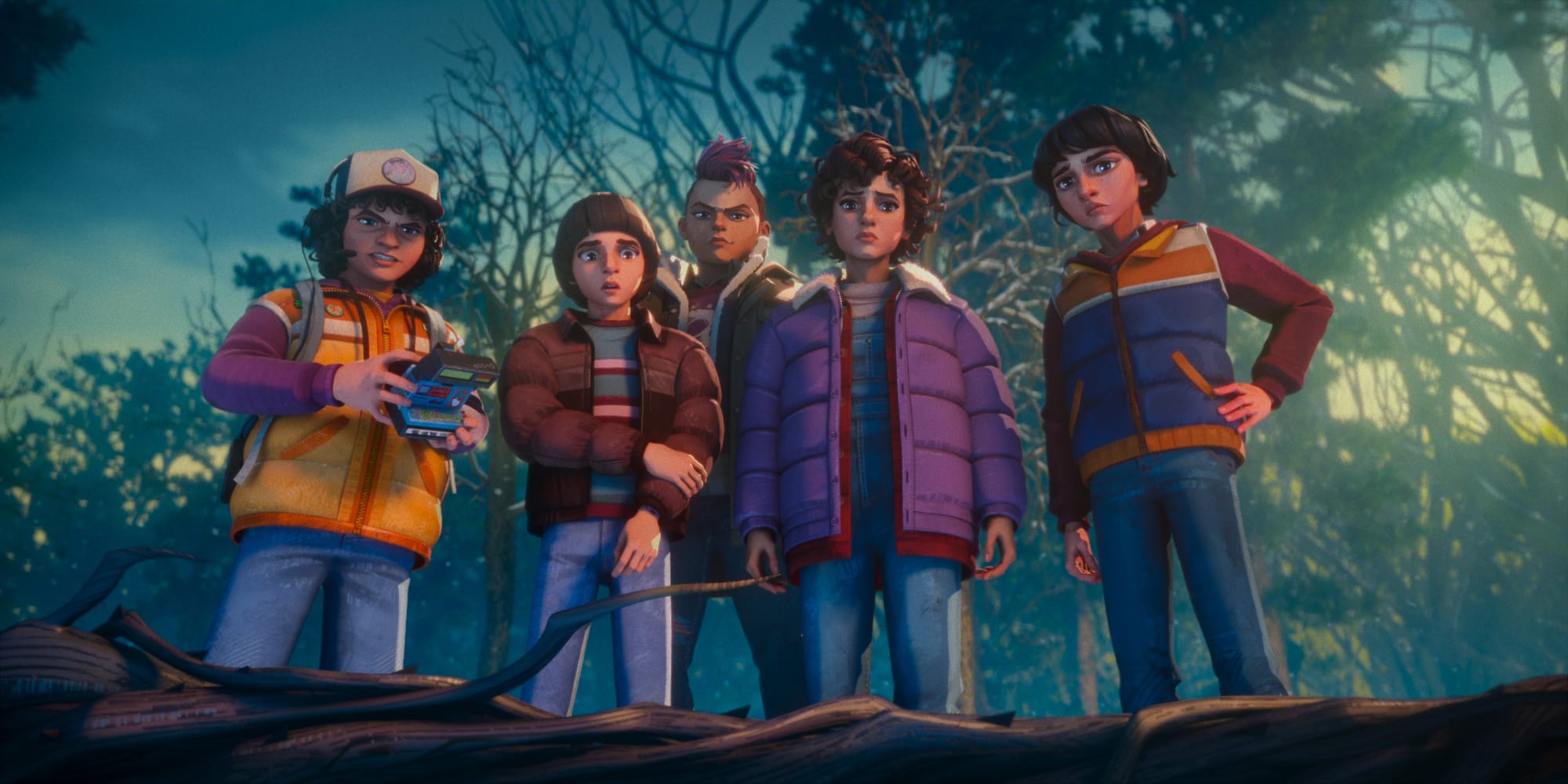
I watched three episodes of Tales From '85, which felt like enough for me. I'm not really the target audience, as it's set up to be more kid-friendly than the live action show. The gore is less nasty, the focus is much more on the middle school characters (the adults and the older teens barely appear in what I've seen), and the Scooby-Doo elements are made even more overt by Dustin's attempt to rebrand the crew as "the Hawkins Investigators Club," complete with an anonymous tip box. It also feels more made for the real die-hards, who want to take in anything related to the title, and the finale of the main show didn't leave me especially eager to return to Hawkins.
That finale necessitated that the cartoon would have to take place earlier in the timeline, just so Eleven could be there. But by placing this new story in between the events of the second and third seasons, Tales From '85 puts itself into an especially tight narrative box. Nothing significant can happen to the main characters or their relationships. There's a new member of the group — Nikki (voiced by Odessa A'zion), a gigantic punk with a pink mohawk who quickly singles out Will as the coolest one of our heroes — and perhaps she'll undergo significant changes (or wind up getting the Bob/Eddie treatment) later in the season. But everything else — Mike's desire to spend more carefree time with Eleven, Max's burgeoning romance with Lucas, Dustin and Steve's evolving friendship — can't move an inch past where Season Three started.
Not terrible, but feels entirely like brand extension that can't figure out why else it's supposed to exist.
This is not a review: Half Man
See above disclaimer, re: having an opinion from only a small sample size.
Like many, I was fascinated by Richard Gadd's viral Netflix hit Baby Reindeer, a semi-autographical tale of stalking and sexual assault. Given how much of Gadd's own life was poured into that show, I couldn't help wondering what he would do for a follow-up, and whether it might suffer from Second Novel (or Album) Syndrome, where the artist used up every idea they'd been thinking about for years on the first, and struggles to start from scratch on the second.
That follow-up is here in the form of Half Man, which debuted earlier this week on HBO. Gadd and Jamie Bell play "brothers from another lover," who lived together off and on in their teens — when they're played by, respectively, Stuart Campbell and Mitchell Robinson (who are much more prominent in what I watched than Gadd and Bell) — because their moms were secretly a couple. Gadd's character is emotionally damaged and terrifyingly violent, and his relationship with Bell's character veers wildly between abusive and supportive — and both versions laced with toxic masculinity.
Where Baby Reindeer episodes were around a half-hour, and sprinkled some occasional weird humor throughout, Half Man is hourlong, and relentlessly dour whenever it's not being outright harrowing (there are depictions of sexual assault and other forms of violence). It's not an easy watch, in other words. I finished the first episode wondering if I wanted to continue at all, despite finding some aspects of it interesting (including the performances by both pairs of actors). I watched the second just to be sure, then decided I wasn't getting enough creative reward out of it to justify the grimness of it all over four additional hours.
Daniel Fienberg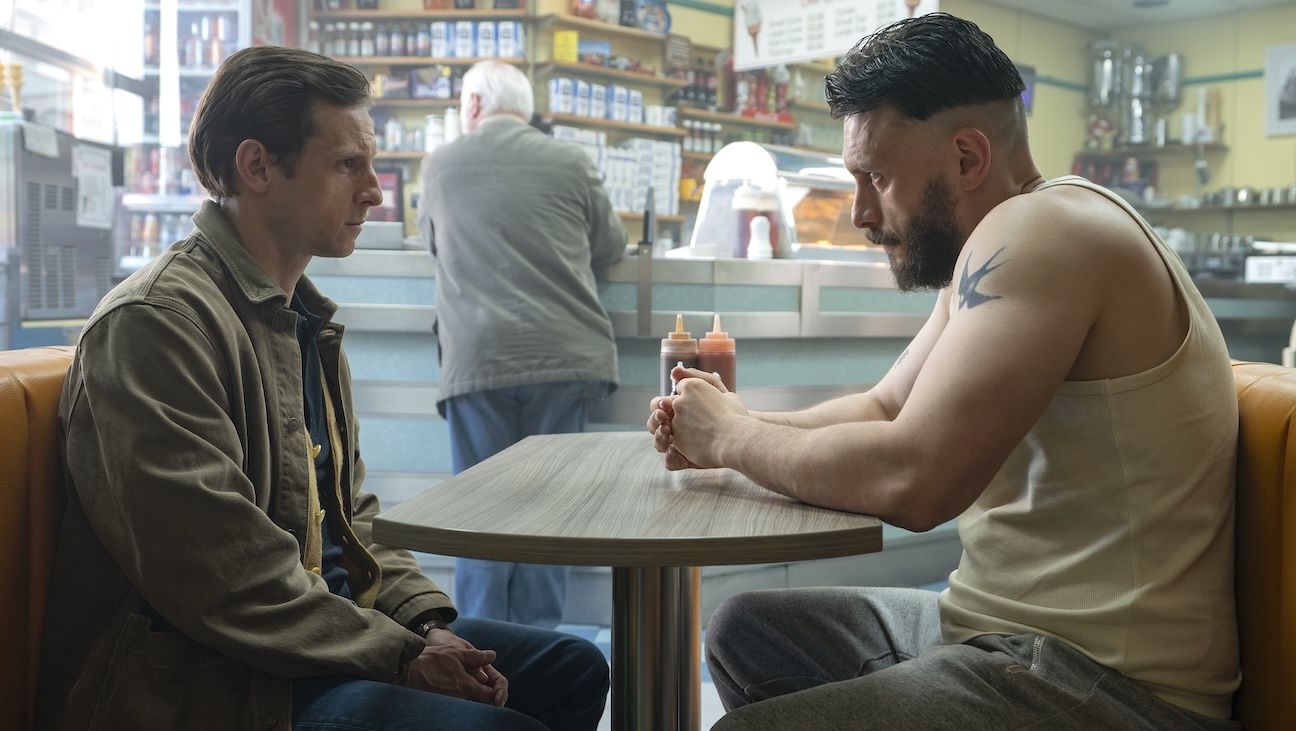
Dan Fienberg watched the whole thing. His review didn't leave me feeling regret for not powering through, particularly where he wrote, "It’s a show with much to recommend it, but it’s an emotionally draining show that, in its ultimate revelations, left me with little enthusiasm for recommendation."
That's it for today! What does everybody else think?
