

Today's What's Alan Watching? newsletter coming up just as soon as my dad has me fight a dog that bit me...
What's next?
Next week's a busy one for premieres, but between ongoing family things and some questionable screener availability, I still don't 100% know what I'll be writing about. Here are the definites:
- A recap of the Shrinking Season Three finale.
- A recap of the penultimate Season Two episode of The Pitt.
- A review of the revival miniseries Malcolm in the Middle: Life's Still Unfair.
I will also likely write about Big Mistakes, a new Netflix comedy created by Dan Levy and Rachel Sennott. As of this writing, I only just got screeners for the fifth and final season of Hacks, there aren't any yet for the long-delayed third season of Euphoria, and I don't know if there will be time to sample other things like Peacock's The Miniature Wife. Doing what I can, when I can.
Catching up
Here's what I've written since last Friday's newsletter:
- For What Else Is Alan Watching? bonus tier subscribers, I talked about bizarre Do Not Reveal requests that have accompanied review screeners, recommended a few less famous items from my home office bookshelves, and talked about some of the weirdest TV retcons. (More on that in a bit.)
 Alan Sepinwall
- I dipped a toe into more cinematic waters, with thoughts on Project Hail Mary and how I felt it stacked up to my beloved The Martian:
 Alan Sepinwall
- I recapped the penultimate episode of this Shrinking season, where Jimmy's loved ones all prepared to leave him, and one exit in particular hit him hard:
 Alan Sepinwall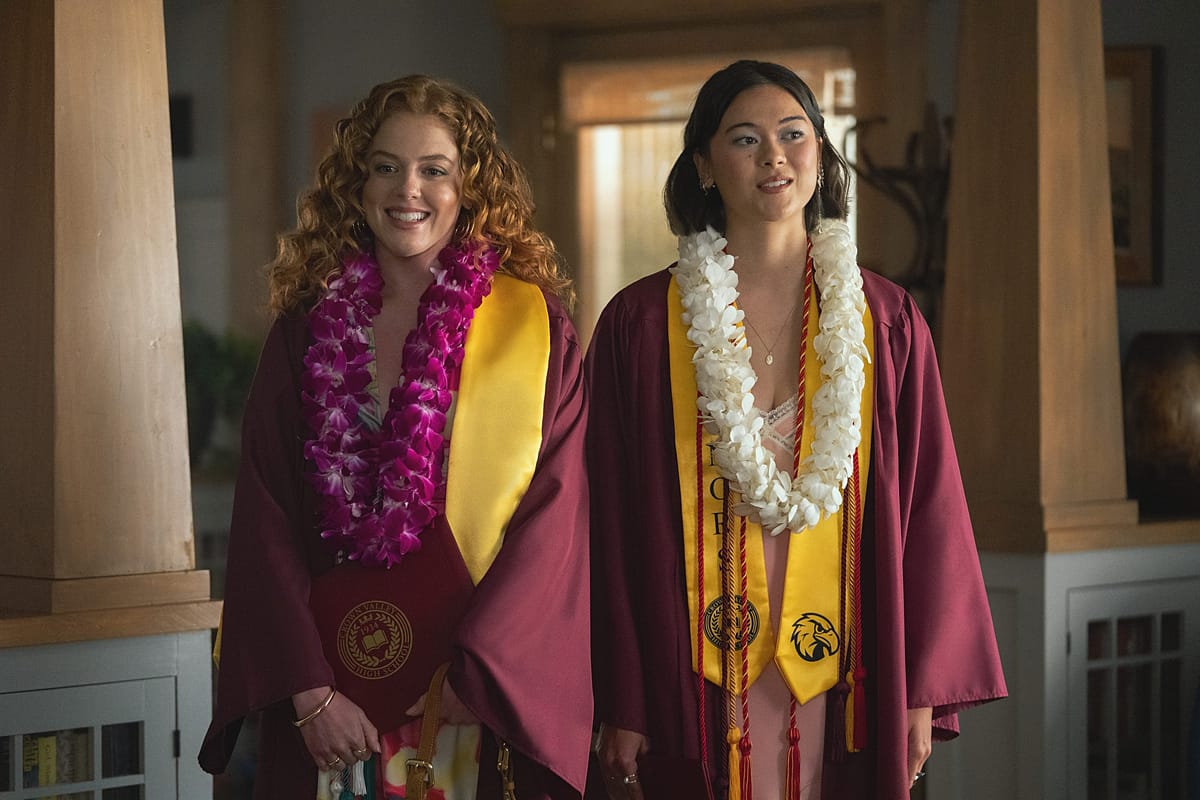
- I recapped this week's episode of The Pitt, where the night shift took over, and the danger signs about Robby began flashing a very bright red:
 Alan Sepinwall
(I know I also suggested last week that I would be doing a column on good shows with bad titles. That one's still coming, but got bumped by other things, including my ability to get to the theater to watch Ryan Gosling be goofy in zero gravity.)
Happy anniversary
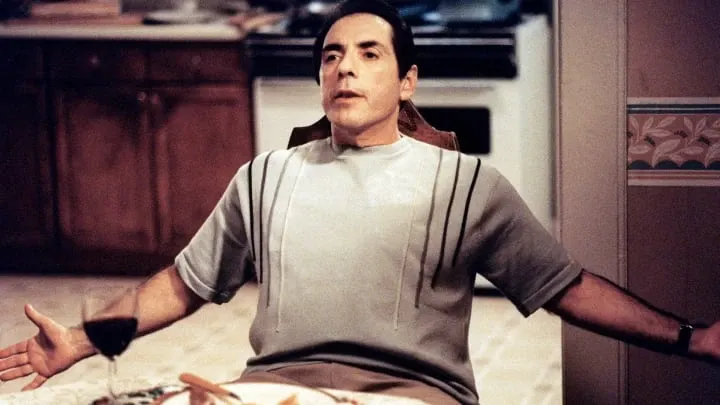
An important date passed last night: it's been 26 years since Janice Soprano cooked dinner for her fiancé, Richie Aprile.
It did not end well. At least, not for Richie.
Let's solve a mystery, and rewrite history

So, back to retcons. For those of you not nerdy enough to be plagued with knowledge of this term, it's short for "retroactive continuity," and was a term popularized in comic fandom to refer to decisions to change the pasts of various characters. For instance, in the early Superman comics, he didn't begin acting as a costumed hero until he was an adult. Then a retcon was made to show that he first did it as a teenager called Superboy, then Superboy was retconned out of existence to go back to Clark waiting until adulthood, etc., etc.
In that Ask Alan video, I talked about some memorable, often infamous ones — series finales that had to be ignored when the shows were revived, Chuck Cunningham Syndrome, Chandler on Friends meeting both Monica and Rachel multiple times, etc — but I omitted some big ones. (Props to reader Muneeb Khan, who not only asked the original question but then pointed out a few that I missed in the comments to that post.) To atone for my sins of omission, here are thoughts on a few of those:
Seymour Skinner wasn't really Seymour Skinner — or was he? "The Principal and the Pauper" is looked on by some Simpsons fans as the episode where the series jumped the shark. As a defender of latter-era Simpsons, I don't agree with the larger idea. But it was definitely a bad idea to reveal that Principal Skinner was actually an imposter, Armin Tamzarian, who had served in Vietnam with the real Seymour Skinner, presumed dead. Instead, the real Skinner was belatedly released from a POW camp, came home, and took over the life of our Skinner, much to the displeasure of the kids at Springfield Elementary and even his own mother. The real Skinner was run out of town on a rail, and the town's citizens pledged to never discuss this again — as if even The Simpsons writers were disavowing the episode before it finished airing. There were a couple of later references to it, but always in the context of this being an embarrassing idea best not given serious consideration ever again.
Frasier Crane's father was dead — until he wasn't. A memorable Cheers episode featured Nancy Marchand as Frasier's imperious mother, who took an instant dislike to Diane. But we never saw his father — mainly because, according to Frasier, he was dead. But then when the Frasier spinoff debuted, it was Mrs. Crane who was long-deceased, while Marty Crane reluctantly became his son's new roommate. While some Cheers obsessives noticed, Frasier ignored the discrepancy until the Season Two episode — written by Cheers veterans Ken Levine and David Isaacs — where Sam Malone came to Seattle to see his old pal. Sam was confused to meet Marty, and Frasier had to explain that he was so mad at his father at the time that he felt it was easier to just tell the gang at Cheers that he was dead.
Bobby Ewing was also dead — until he also wasn't. This is the most infamous retcon in TV history. I would blame its absence from the video on me thinking it was too well known to mention, but really it's that my brain is a sieve on this kind of thing some days. For those who don't know, Bobby was the "good brother" on Eighties mega-hit primetime soap opera Dallas. Near the end of the show's eighth season, Bobby died in a car accident. This had ripple effects for the characters on both Dallas and its spinoff, Knots Landing. But Dallas fans were so upset by Bobby's absence that the following season ended on a startling cliffhanger: Bobby was alive and well, in the shower of longtime love interest Pam. Viewers had to wait for the next fall for the lamest of explanations: Bobby's death — and every single plot from the ninth season — only happened as Pam's dream.
Perhaps the most ridiculous part is that the Dallas writers didn't warn the Knots Landing creative team about this, even though several storylines from the equivalent season happened due to characters responding to Bobby's death. The Knots writers were so annoyed, they decided to leave Bobby dead, rather than erase a season of their own, and they stopped referring to current events on the parent series.
How many kids does Cliff Huxtable have? This one came to mind because Cosby Show alum Geoffrey Owens, who played son-in-law Elvin, appeared in this week's The Pitt. In the series pilot, the Huxtables explicitly only have four children, all of them living under the brownstone's roof. But then the producers decided to add a fifth child, eldest daughter Sondra, who was already off at college but would appear frequently, before she and Elvin eventually became cast regulars.
The Beverly Hills 90210 kids repeated their junior year. When they start out, high school shows are often vague about how old the kids are supposed to be, which gives the writers some leeway to delay graduation for a while in the event of success. (I could write about 20 paragraphs just about Friday Night Lights, where, among other things, Landry was apparently a licensed driver as a high school freshman and Riggins and Street were best friends since childhood despite being two grades apart.) And if they're explicit about it from the start, it's usually to make all the characters sophomores, to provide three years of runway before the graduation problem rears its head. But midway through the first season of the original 90210, Brandon Walsh flirts with a senior girl, and when she asks where he's applying to college, she realizes that he's only a junior. David Silver had already been established as a freshman, but all the other main characters were now canonically juniors. They finished out the school year, had a bunch of adventures that summer, and began the next year of school... still as juniors. David was now a sophomore, but none of the others had advanced a grade. No one commented on this at any point.
In part because I myself was a junior in high school during that first season, I became weirdly obsessed with this factoid, and would ask anyone I met who worked on the show about it. For a long time, no answers. (Several writers who from the post-high school years were surprised to even learn that this had happened.) Finally, during a trip to Los Angeles, one of the original 90210 producers asked if I would be a guest at a college class he taught. I asked him about the repeating the junior year thing, and he said he would tell me the truth at the end of the class. I showed up dutifully, talked, and took questions from his students. When the class was in its final minutes, I turned to him and said it was time to pay up. He sheepishly explained that in the script for that episode, Brandon was supposed to admit to being a sophomore, but Jason Priestley didn't want to play the scene that way. He was already in his early 20s, and — like many fictional high schoolers before and since — felt a bit embarrassed to be playing a teenager. Being a sophomore was a bridge too far for him. So after much discussion, they changed the line to junior, and avoided discussing age as much as possible for the remainder of that season. But if you want to rationalize it as all of them being held back a year because they spent too much time on extracurricular shenanigans — even Andrea Zuckerman! — then you might as well.
That's it for today! What does everybody else think?
