

Today's What's Alan Watching? newsletter coming up just as soon as I T just as soon as I give you my woodworking goggles...
What's next?
The combination of a couple of overlapping book deadlines, personal obligations, and some screeners of upcoming shows that haven't filled me with enthusiasm means it may be a light week next week. There will definitely be Shrinking and The Pitt recaps, and I'll be doing an extra Ask Alan video for paid subscribers on both tiers — so send in those questions.If time and inspiration allow, maybe I'll write another thing. (I still need to catch on Starfleet Academy ahead of the finale.) But some weeks here will be more robust than others.
Catching up
Here's what I've published since last Friday's newsletter:
- In a new Ask Alan video mailbag for What Else Is Alan Watching? bonus tier subscribers, I talked about some classic shows that were canceled after only one season, and tried to identify the TV episode that had the greatest future star power among its guest cast.
 Alan Sepinwall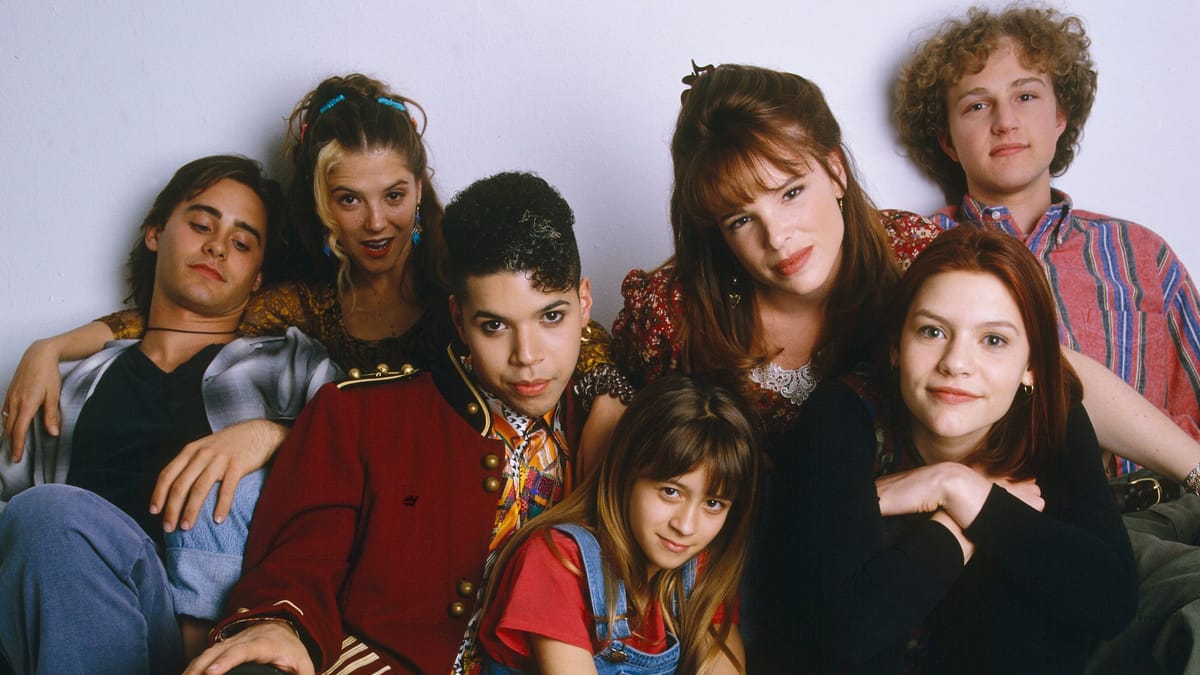
- I recapped the midpoint of Shrinking's terrific third season, where Derek's health scare forced everyone to get their acts together:
 Alan Sepinwall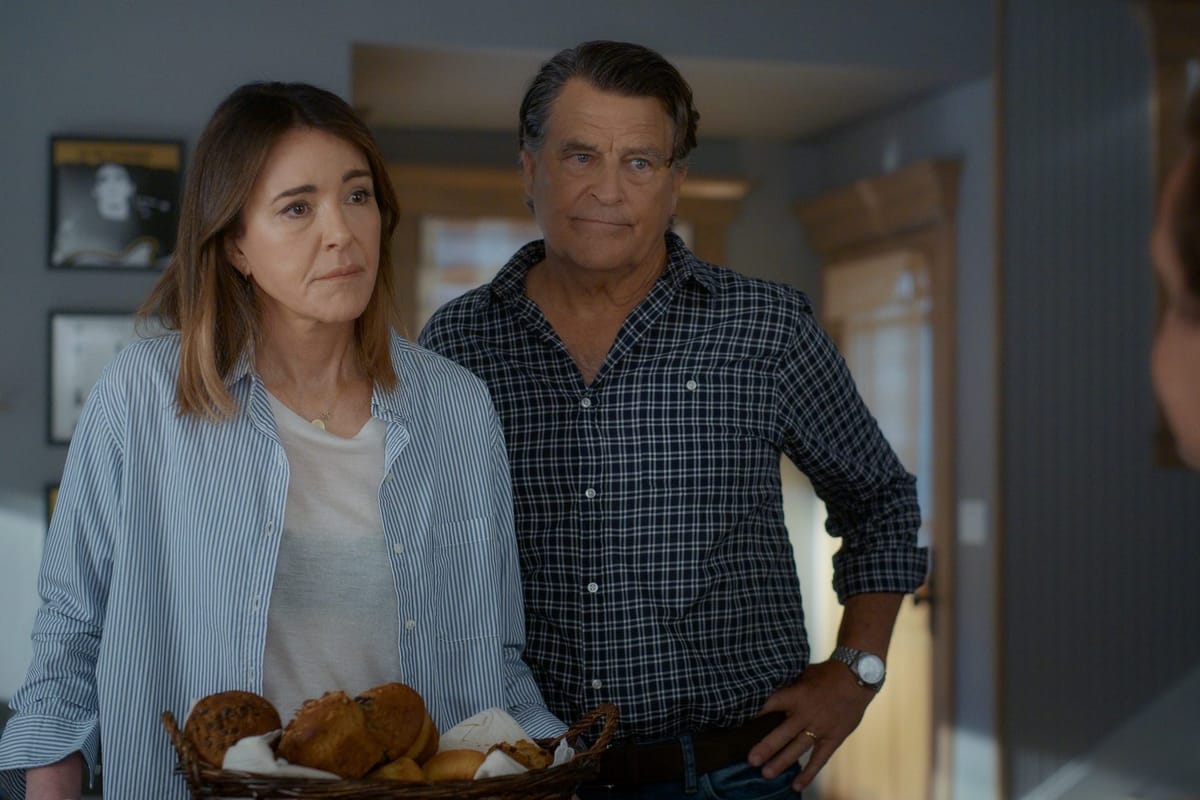
- I reviewed Netflix's Vladimir with Rachel Weisz and HBO's Rooster with Steve Carell, noting all the things the two college comedies have in common, even as they ultimately feel very different:
 Alan Sepinwall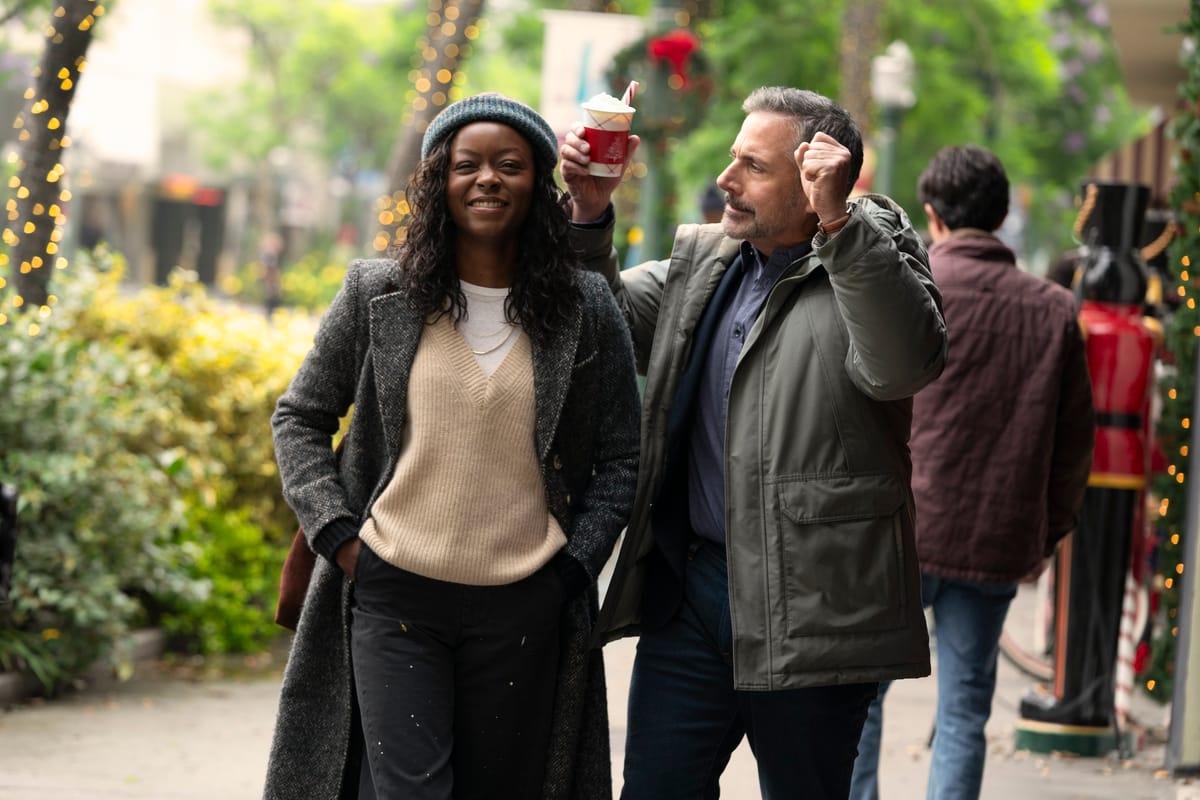
- I recapped this week's The Pitt, where Javadi made a big mistake, and Mel's tough day was complicated by a visit from her sister:
 Alan Sepinwall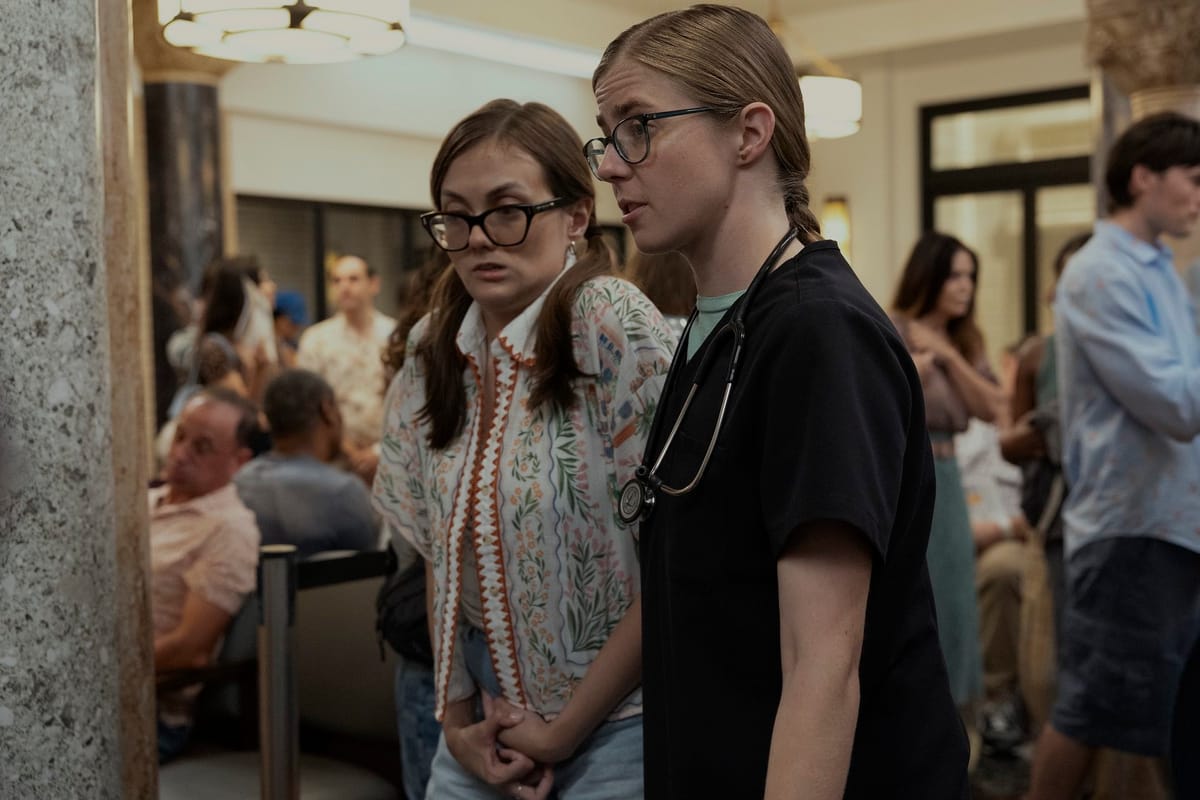
Is there in truth no Beauty?

I said almost all of what I had to say about Ryan Murphy's body horror series The Beauty when I reviewed it in January:
 Alan Sepinwall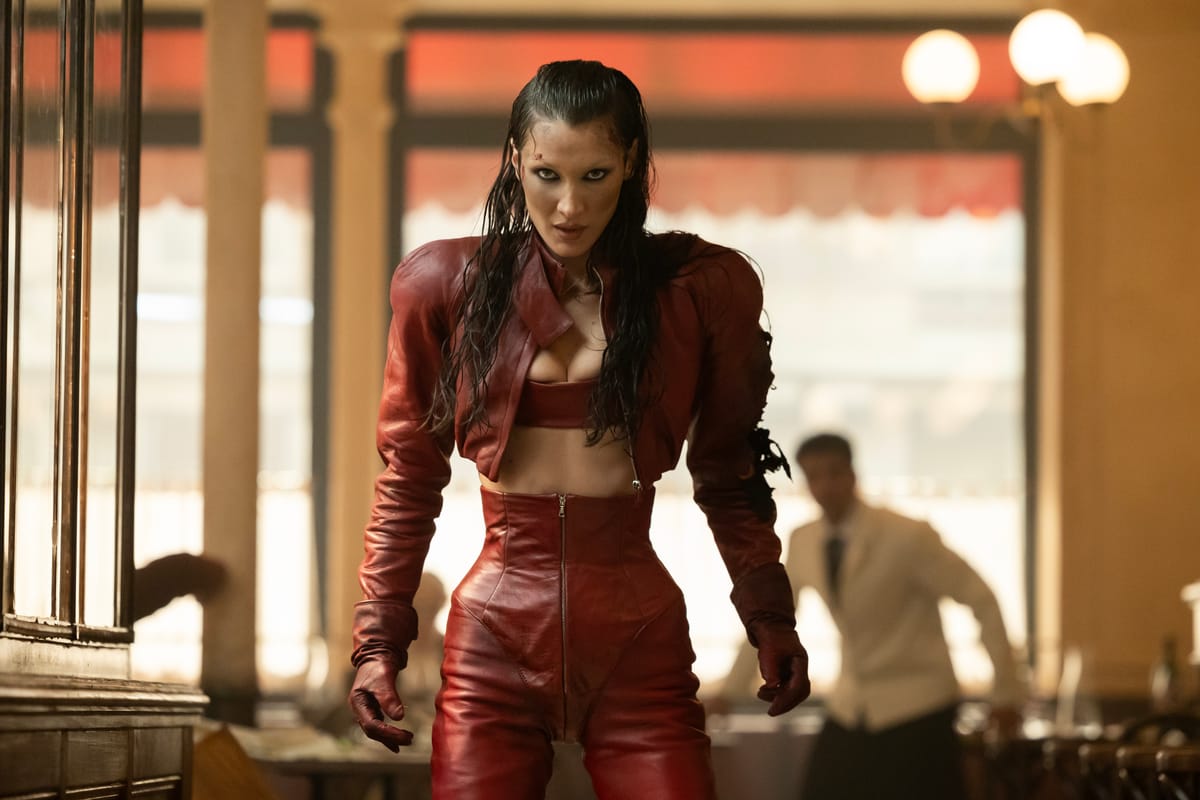
Based on comments here, social media chatter, and discussion on the What's Alan Watching? Discord, I didn't sense a ton of enthusiasm among you for Murphy's latest attempt to throw everything and the kitchen sink into the same show. But if any of you stuck with it, I'm curious how you felt — especially when (spoilers for the latter half of the season) they replaced first Rebecca Hall and then Evan Peters with younger actors (in Peters' case, a much younger actor), and then when the show abruptly pivoted from the investigation into Ashton Kutcher to showing a bunch of high school kids using the drug.
Weird show. Not dull. Sometimes I really liked it. Often, I found myself wondering why I was giving Murphy another shot. If you saw it, what did you think?
What's a What's Alan Watching? anniversary?
A bad job by me last Friday in failing to note that it was the anniversary of the February 27, 1989 broadcast of the original What's Alan Watching?, a CBS pilot starring Corin Nemec as a TV-obsessed teenager with an overactive imagination. Though CBS didn't order it to series, they aired it as a special, because the show was produced by Eddie Murphy, who cameoed in several of the fantasy sequences and made it easy to promote.
When this aired, I was a TV-obsessed teenager named Alan (the proper spelling) with an overactive imagination. So you can imagine why it struck a chord, and why I wound up using it as the name for various places I've written over the years.
Directed by future Emmy winner Tommy Schlamme, the show was ahead of its time in many ways, including how it blurred various genre lines. Looking back with nearly 40 years of hindsight, I don't think all of it works now. But I wish Schlamme and company had been given even half a season to mess around in this world. If you're curious, the full thing's on YouTube.
How can the same show happen to the same week twice?
As mentioned above, a lot of the Rooster/Vladimir column deals with the many parallels between the settings and plots of the two new shows. It inspired me to look back at one of my favorite weird TV trends: when two series with very similar premises are developed independently from one another and debut around the same time.
Here are some of the more memorable instances of this:
- The most famous of these came in 1994, when NBC and CBS both had new dramas set in Chicago hospitals — respectively, ER and Chicago Hope. For a good chunk of that season, the two even aired in the same timeslot, Thursdays at 10, back when timeslots still mattered. It was a high-profile game of chicken. CBS assumed they had the upper hand, since Chicago Hope was created by Emmy-winning showrunner David E. Kelley, had an impressive star in Mandy Patinkin, and was getting stronger reviews from the nation's TV critics. But ER had a two-hour pilot, and NBC didn't want to pre-empt Seinfeld during premiere week to show it. So ER debuted on a Monday night, and was such a phenomenon immediately that poor Chicago Hope didn't have a chance. It still ran for six seasons, and was a solid medical show. ER, though, was a game-changer, turning George Clooney into a global superstar, and still resonating 30 years later, to the point where we now have The Pitt.
- For the most part, I'm skipping over shows developed by the same network — like when ABC had three different terrible comedies in 2012 about "the Mancession" (one of which was the infamous cross-dressing sitcom Work It!) — because the executives involved were aware that all of these were in contention. That said, I can't not mention the fact that in the fall of 2006, NBC had two different shows set backstage at a fictionalized version of Saturday Night Live, in Tina Fey's 30 Rock and Aaron Sorkin's Studio 60 on the Sunset Strip. It's wild that the network decided to air both shows, given the hyper-specific premise, even if one was a sitcom and the other a drama. As with ER and Chicago Hope, the prognosticators were way off with this one. Everyone assumed Studio 60 would be the next great Sorkin show, and that the 30 Rock pickup was just NBC doing Lorne Michaels a favor, and it would go quickly. Instead, Studio 60 was a creative and ratings disaster (which I recapped every episode of, for some reason), while 30 Rock became one of the most beloved comedies of its era. Sorkin at least had the sense of self-deprecation to later play himself in a 30 Rock cameo.
- In the fall of 2007, NBC and the CW both had shows about nerds who worked in big box stores who were granted superpowers that they didn't want: respectively, Chuck and Reaper. Chuck became a cult favorite for a while, and was able to make it through five seasons by the skin of its teeth, while Reaper only lasted two, despite a wonderful performance by Ray Wise as the Devil.
- The fall of 2002 somehow brought two different shows where adult men traveled back in time to relive their adolescence: That Was Then on ABC and Do Over on the WB. This was a case where nobody was interested in the premise: That Was Then was canceled after only two episodes had aired, while Do Over was pulled after its 11th. I once asked a person who worked on one of those shows about the weird overlap; they joked that for the five seconds both were on the air, there was "bad blood" between them.
- The 2010-11 network TV season brought with it a trio of sitcoms about friend groups whose members were in different stages of their relationships. Traffic Light and Perfect Couples came and went without much notice (though the latter had a great A.C. Newman theme song that I still have on a few playlists), but the third turned out to be one of that decade's classic hangout sitcoms: Happy Endings.
- The spring of 2018 brought with it a pair of cable dramedies about unconventional assassins: Bill Hader in HBO's Barry and Jodie Comer in BBC America's Killing Eve. Both had fantastic first seasons, but ones that seemed like such high-wire acts that I wondered if they wouldn't be better off walking away in triumph after that. As it turned out, Barry was mostly great for the rest of its run (even if I didn't love the ending), while Killing Eve quickly spiraled as it kept swapping in new showrunners for each season.
- ABC's Once Upon a Time and NBC's Grimm both attempted to do modernized takes on classic fairy tale characters and concepts, and debuted within five days of one another in the fall of 2011. Like ER and Chicago Hope, this was a rare everybody-wins scenario: Once Upon a Time ran for seven seasons, and Grimm for six. Everybody made money.
- Also in 2011, there were somehow two different dramas about the Borgia family: Showtime's The Borgias, with Jeremy Irons as Rodrigo Borgia (aka Pope Alexander VI), and Borgia, with John Doman from The Wire as Rodrigo. Because the latter was a European production (with an American showrunner, Oz creator Tom Fontana) sold to global TV markets (it also streamed for a while here on Netflix), they weren't really in competition in the same way many of these others were. Still, felt it worth mentioning for the fact that I once moderated a Borgia panel at the Paley Center where Mike Nichols and Richard Belzer asked multiple questions from the audience. (Nichols' questions were, frankly, better than mine.)
- Going old school, The Addams Family and The Munsters debuted a week apart in the fall of 1964. Both featured families of larger-than-life Halloween type characters — the former based on Charles Addams' iconic cartoons, the latter featuring a Frankenstein monster, two vampires, and a werewolf — navigating life in normal suburbs. Both ran only two seasons, yet have had such robust afterlives — including a few terrific Addams Family films — that it feels like they were much bigger hits. Forever linked.
- Depending on whom you ask among both TV industry people and sci-fi fans, the mid-Nineties overlap between Star Trek: Deep Space Nine and Babylon 5 was a coincidence, or a case of Paramount ripping off Babylon 5 creator J. Michael Straczynski's idea. To quote Rebecca Bunch, the situation is more nuanced than that, but it nonetheless meant there were two hard sci-fi shows set on space stations and dealing with complex galactic politics and war airing in syndication at the same time.
- Finally, there was a period of about 12 months spanning from 2019 to 2020 where there were six different shows about astronauts or space travel: Apple's For All Mankind, HBO's Avenue 5, Netflix's Space Force, Netflix's Away, Disney's The Right Stuff, and Showtime's Moonbase 8. And Hulu's The First debuted a year earlier than that, with the same "first mission to Mars" premise as Away. For All Mankind is the only one that struck a chord with viewers, and will be back for a fifth season later this month. (Fingers crossed that it somehow reverses the creative downturn of the two previous seasons?)
So why does this happen? Whenever this would happen back in the days of the Television Critics Association press tour, executives and producers attached to one show or the other would use phrases like, "There was just something in the zeitgeist," or insist that they didn't know the other show existed until they were past the point of no return in development. I used to make fun of the "something in the zeitgeist" theory, but the longer I've been doing this, the more I've started to believe it's a real thing. Somehow, multiple Parks and Rec writers went on to create TV shows set in glitching versions of the afterlife — The Good Place, Forever, and Upload — and by all accounts, none of them had discussed this with the others at the time each began working on the new series. And in researching my Serling biography, I found multiple cases of identical ideas being developed independently from one another, that still led to unfounded plagiarism accusations.
The world is full of weird coincidences. TV just happens to have a lot of them, including Vladimir and Rooster this week.
That's it for today. What did everybody else think?
