

In honor of the first full year of What's Alan Watching?, through Sunday October 4, get 20% off an annual subscription to the What's Alan Writing? main paid tier, for all my reviews and recaps.
We're now exactly two weeks away from the publication of Serling: A Journey Into The Twilight Zone with TV's First Visionary. It's still available for preorder wherever books are sold:
 Alan Sepinwall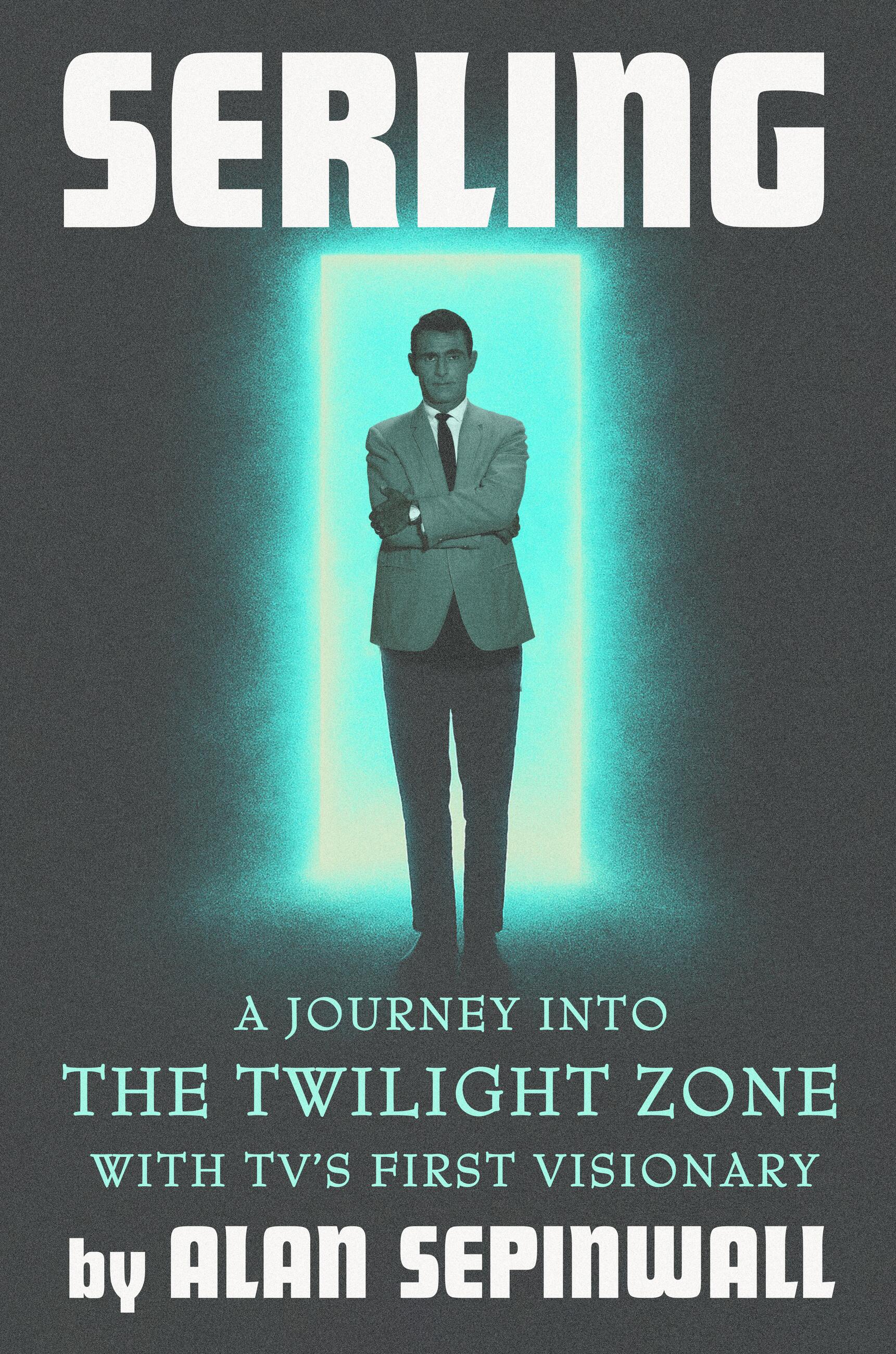
And if you order it any time prior to October 13, you can get a free bonus essay I wrote about my favorite Twilight Zone episode (spoiler: I'm going to say what it is in a minute).
Once or twice a month, I publish an Ask Alan mailbag for subscribers to the What Else Is Alan Watching? bonus tier. (You can subscribe to that tier for 20% off at the moment.) To help whet your appetite for the book, I decided to do an all-Serling edition of Ask Alan, free to read for everyone. Below, I talk about the best Twilight Zone episode to show a newcomer, why Twilight Zone has had more staying power than Serling's other work, Serling's creative descendants, and a lot more. Enjoy!
ERIC: What's the best episode to introduce someone to The Twilight Zone? Not necessarily the best episode or the most interesting to discuss, but the best entry point for a blank slate newcomer.
My answer for best entry point and best overall episode is the same: "The Monsters Are Due on Maple Street." It just captures so much of what made Twilight Zone special: social commentary that's unmistakable even when placed in sci-fi drag, a fun twist ending (borrowed from a short story Rod wrote in college), and a thrilling, scary entertainment. It's hard to point to any episode of an anthology show and say, "That's what the show was like." But "Maple Street" is what Twilight Zone was like at its best. With questions like this, there's a tendency to overthink things. The obvious choice is obvious for a reason.
TOM: Why do you think The Twilight Zone has endured so much (even to the point SyFy still runs annual Fourth of July marathons of it) while Night Gallery and Serling’s earlier Fifties TV work are at best cultural footnotes?
The thing a lot of people don't understand about Serling is that he was already famous and successful before Twilight Zone, and for writing an entirely different kind of television. Basically, he was Aaron Sorkin before Aaron Sorkin: celebrated author of socially-conscious television drama. Those teleplays haven't endured because they feel much more of their moment, and also because they're simply harder to watch, especially pre-YouTube. Most were performed live, and kinescope recordings of them were blurry and not designed to be replayed over and over. Local TV stations didn't air syndicated repeats of Playhouse 90 the way they did Twilight Zone.
Night Gallery actually was in syndication for quite some time, but the syndicated versions were butchered in multiple ways I've never heard of happening for any other series, including (but not limited to) episodes of a completely unrelated show, The Sixth Sense, being folded into the Night Gallery syndication package, with a very reluctant Serling filming new introductions for them. So it played badly in syndication, and hasn't been perpetually available on streaming services the way Twilight Zone has been. (At the moment, you can buy episodes or seasons digitally or on physical media, but it's not on Peacock, despite being a Universal production.) It also just looks much more dated than Twilight Zone, despite the episodes being made a decade later. There's something about the early Seventies that looks like nothing else, even for stories that are period pieces.
BRIAN: What would you suggest ideally having seen before reading Serling? I know that spoilers aren’t the main point with even the most O. Henry, twist-ending, ironic tales, but just in terms of having the fullest background for what you discuss.
One of the main themes of the book is that Serling was a hugely autobiographical writer, who wrote every original character as speaking with his own voice(), with stories inspired by some aspect of his life. So every chapter begins with a Twilight Zone episode, a teleplay, a short story, etc., that in some way reflects the moment in Rod's life that I'm writing about.
(*) This is another thing that links Serling and Sorkin.
You don't need to watch any of those episodes to follow the book, as I explain them each in detail. But if you were of a mind, I would suggest a handful: The Twilight Zone episode "Walking Distance" is probably the single most personal thing he ever wrote. The Night Gallery segment "They're Tearing Down Tim Riley's Bar" (from the sixth episode of Season One) is a bookend to "Walking Distance" that reflects how Rod was feeling late in his career; and two of his Fifties teleplays. "The Velvet Alley" was a thinly-disguised commentary on Rod's rise to fame and success in that decade:
And "Requiem for a Heavyweight" was the best of his Fifties teleplays (and better than the 1962 feature film version, though I like that one, too):
SEAN: What creators today do you see as descendents of Rod Serling? Vince Gilligan and Charlie Booker come to mind, but I struggle to think of others.
I spoke with both Gilligan and Brooker for this book, and interviewed or otherwise asked questions of Steven Spielberg, Guillermo del Toro, J.J. Abrams, Damon Lindelof, Ben Stiller, Rian Johnson, David Chase, Nia DaCosta, Jane Schoenbrun, Rob Mac, and Joe Dante, among others. All of them talked about the ways that Serling and Twilight Zone (or, in del Toro's case, Night Gallery) inspired their work. Sometimes, the influence is obvious: Pluribus has a Twilight Zone premise (and Carol Sturka's last name comes from Vince's favorite episode), Black Mirror was explicitly designed as a modern-day Twilight Zone, Lost features tons of twists, and Severance is, as Stiller has described it, a mash-up of Twilight Zone and The Office. Others are less obvious, but no less clear. Rob Mac spoke really eloquently about how you can find Serling's DNA in Always Sunny and the other stuff he writes.
There are also some big Serling acolytes I wasn't able to get to, including M. Night Shyamalan and Jordan Peele (both of whom appear in the book in the form ofg archival quotes). Ryan Coogler said one of the biggest influences on Sinners was a Twilight Zone episode called "The Last Rites of Jeff Myrtlebank." Serling's DNA is everywhere you look in contemporary pop culture.
In honor of the first full year of What's Alan Watching?, through Sunday October 4, get 20% off an annual subscription to the What Else Is Alan Watching? tier, which gives you access to everything on the main tier, plus bonus content — this is where the Ask Alan mailbags usually live — and access to the What's Alan Watching? Discord
MUNEEB: What would Serling's career have looked like if he had lived longer?
Serling died in 1975, at age 50. His career was in a lull at the time. Night Gallery (which ended in 1973) was an unhappy experience for him, movies had mostly been a struggle (though Seven Days in May is great, and Planet of the Apes was a huge hit), and the TV business was largely moving on from the kind of stories he liked to tell. But as one of his Ithaca College students put it to me, if Rod had lived even five or six more years, suddenly Spielberg and George Lucas and all these other directors who had grown up on Twilight Zone would be in power, and they surely would have been asking him to write for them. Twilight Zone: The Movie would probably have featured new stories by Serling (and maybe Richard Matheson), rather than it mostly being remakes of episodes from the show. He would have been poised to have a big second act, if the cigarettes and his family heart condition hadn't gotten him when they did.
WILLIAM: What do you think was the biggest missed opportunity of Serling's professional career? A project unproduced, a path available but untaken, or even something that did get made but either not up to his personal standards or choked off before it could peak?
Rod really tried to become both a Broadway playwright and a novelist, and neither quite worked out. I really liked his The Season to Be Wary novella, which was adapted into the Night Gallery pilot. The writing is raw and unpolished at times, but I feel like with practice, he could have become great at prose. He just didn't stick with it because Season to Be Wary flopped.
I also wonder what a version of Planet of the Apes made from his script, and not the rewritten Michael Wilson version, would have been like. Serling wrote the first several drafts, then had to drop out due to a scheduling conflict. I've read his drafts. They're talkier and less action-oriented than the finished film. But when you paired talky Serling scripts with a strong visual director, like John Frankenheimer on Seven Days in May, it could work very, very well. I'd like to have seen what Franklin Schaffner did with a Serling Apes script, especially one where Rod had time to do a few more rounds of revisions.
Thanks for reading! As another well-known critic once said...
