

Happy holiday weekend, to those who celebrate getting an extra day off. Today's Friday Check-In coming up just as soon as my resume just says "stress"...
Catching up
Here's what I've published since last Friday's newsletter:
- A spoiler deep dive into The Bear finale:
 Alan Sepinwall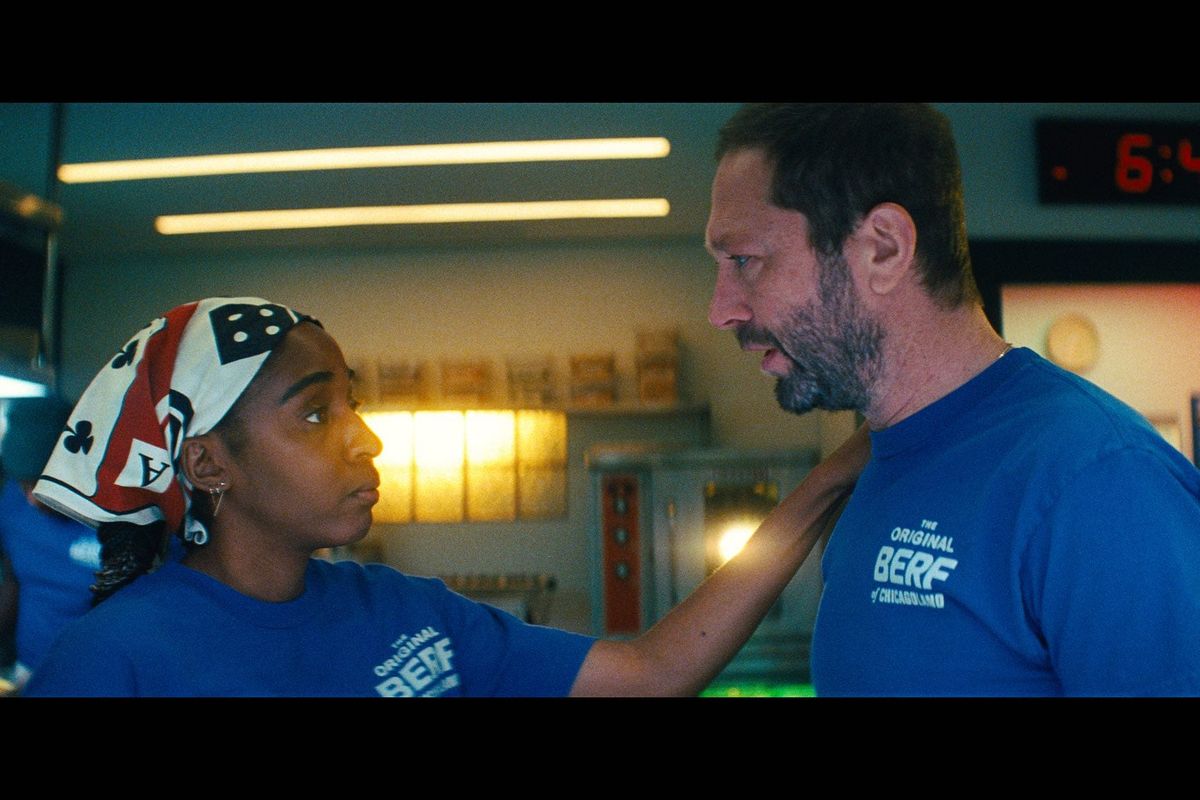
- More Bear talk on the latest TV Is Good podcast episode with Kathryn:
 Alan Sepinwall
- My recap of the latest The Vampire Lestat:
 Alan Sepinwall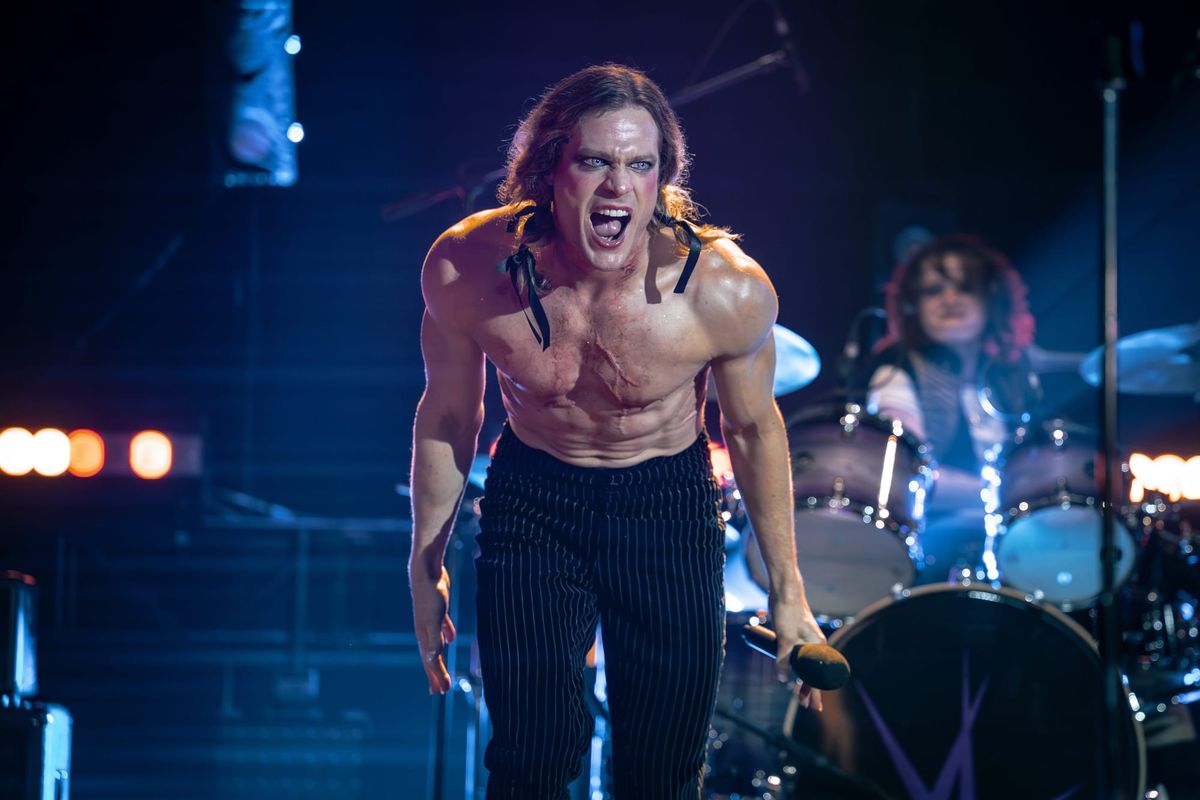
- And I wrote about Prime Video's Elle, a Legally Blonde prequel which would basically prevent the events of Legally Blonde from happening:
 Alan Sepinwall
What's next?
Coming up over the next week:
- Another Vampire Lestat recap;
- A new TV Is Good episode, where we talk about Elle, the weirdness of prequel series in general, and then the absolute miracle that was NBC's Hannibal.
- A new Ask Alan video mailbag for What Else Is Alan Watching? bonus tier subscribers, so send in those questions!
- A review of Netflix's new Little House on the Prairie adaptation.
Make it X-Men '97 again through science or magic
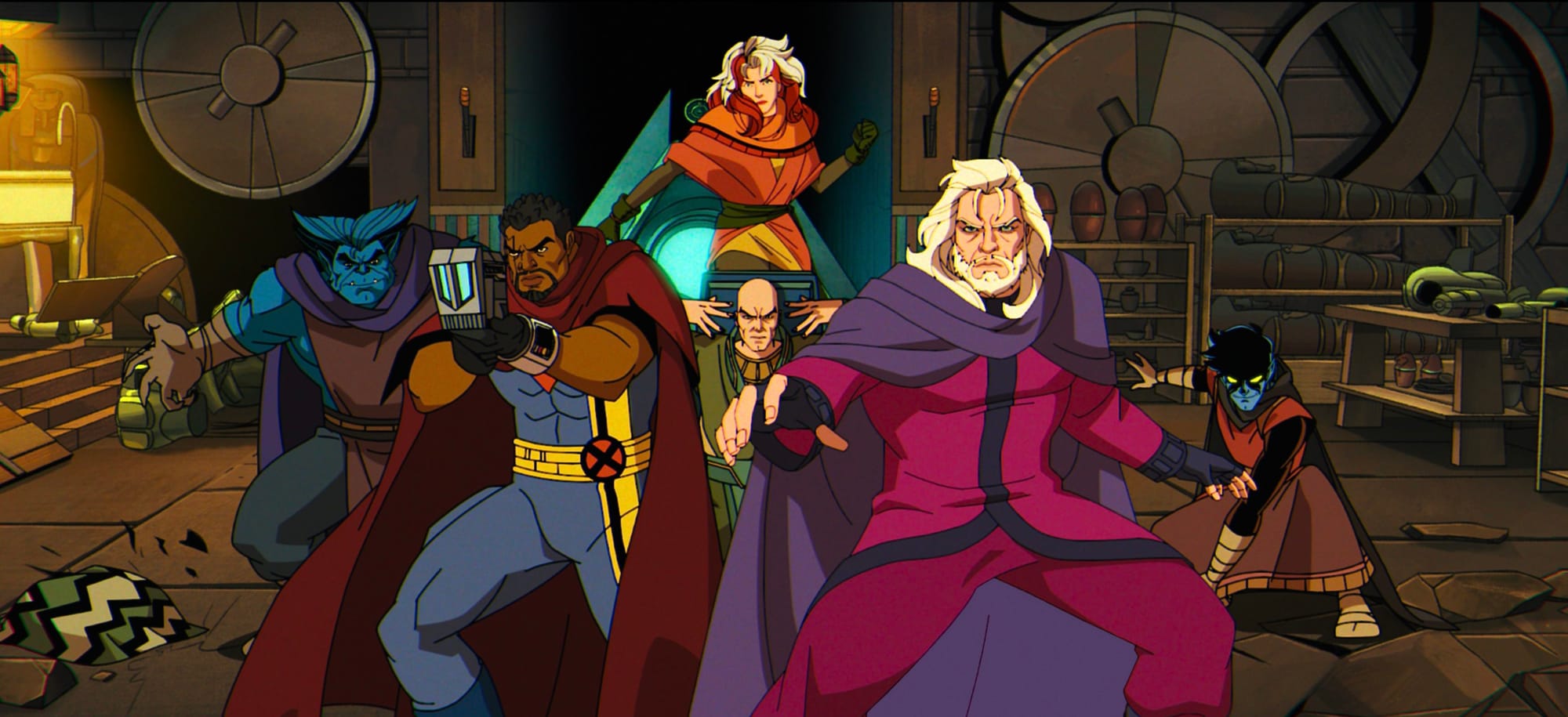
X-Men '97, which returned to Disney+ this week for its second season, is a show I have a weird relationship with. It's a continuation of a cartoon I was too old to be into when it first aired, and is mixing and matching a bunch of comics stories that were published after I stopped being a regular X-Men reader. When I started watching the first season, I very much had a "I can see what's interesting about this, but it's just Not For Me." I gave it a few more episodes, though, and when we got to the storyline where (Season One spoilers) the mutant nation of Genosha is mostly wiped out, and Gambit sacrifices himself to stop the Sentinels that are attacking it, I suddenly found myself all-in on the show, and liking Gambit for basically the first time ever.
Season One ended with the team split up and stranded in two separate time zones: half in ancient Egypt, where Apocalypse and Rama-Tut (one of Kang the Conqueror's alternate identities) are preparing to go to war; the other half in a dystopian future where Cable is still a kid, and Cyclops and Jean finally get a chance to act like his parents. The four episodes of Season Two toggle between those locales and a present-day plot where two other mutant teams — the government-sponsored X-Factor and the colder and more brutal X-Force — go to war.
As the previous paragraph might suggest, there is a lot going on. The show (which has had some behind-the-scenes turmoil) is throwing what feels like 50 different stories into a blender and trying to make them all fit together seamlessly. To be fair, this was more or less how the comics functioned by the Nineties, when there were a half-dozen different titles that sometimes told interconnected plots ands sometimes didn't. Both then and now, it means the saga is something I find much more exciting in individual moments than as a cohesive, easy-to-follow narrative. Those individual moments can be really potent, and there's some fun guest casting — the season features the voices of three different Star Trek: The Next Generation alums in the form of Gates McFadden, Michael Dorn, and John DeLancie — but I very quickly had to tell my brain to stop asking questions about why almost anything was happening.
Third Thickest
I watch a lot of television for work, much of it dark and/or weird, and I have to power through a lot of it quickly in order to review. That limits the amount of TV viewing I can do with my wonderful wife. Every now and then, though, a show pops up that matches both of our tastes, and that I'm not reviewing and thus can enjoy with her at whatever leisurely schedule works for us both. One of those is Netflix's Survival of the Thickest, whose third and final season debuted this week.
Comedian Michelle Buteau stars as Mavis Beaumont, looking for fulfillment in both her love life and her dream of becoming a successful stylist. The show begins with Mavis realizing she has to get out of a long-term relationship with a seemingly perfect guy who's not perfect after all. She has to basically start her life over and, with the help of best friends Khalil (Tone Bell) and Marley (Tasha Smith), deal the harsh financial and emotional realities of doing this well into adulthood. She has to take a demeaning job with a narcissistic aging supermodel (Garcelle Beauvais) and try to figure out if she can build a new relationship with Luca (Marouane Zotti), a hot and empathetic guy who also happens to live in Italy. And she spends a lot of time hanging out at her neighborhood drag bar, where Peppermint from Drag Race plays a fictionalized version of herself.
It's nothing fancy, but it's well-executed, charming, and slyly funny. Though the show was co-created by Buteau and informed by both her life and comic sensibility, she often gives the best lines to Tone Bell. In the third season premiere, for instance, Mavis is exploring fertility treatments, given the age of her eggs, and is worried Khalil may not be helpful enough with her injections, since he's never seen Rent. "I haven't seen Rent," he argues, "but I have seen New Jack City, and that's like a documentary on needles."
I've only seen the season's first two episodes, and I did that on my own because I wanted to be able to spotlight it here. Going to go back to the beginning to enjoy those two, and the rest of the series, with my bride.
In the days when most Netflix shows are lucky to even get a second season, it's a minor miracle that something this low-profile got three seasons, even if you consider that it probably costs a fraction of something like The Boroughs, which was canceled after only one season despite performing very well by various publicly-available streaming metrics.
That's it for today! What does everybody else think?
